30+ Best Places to Visit in Dharamshala and Palampur (2026 Ultimate Guide)
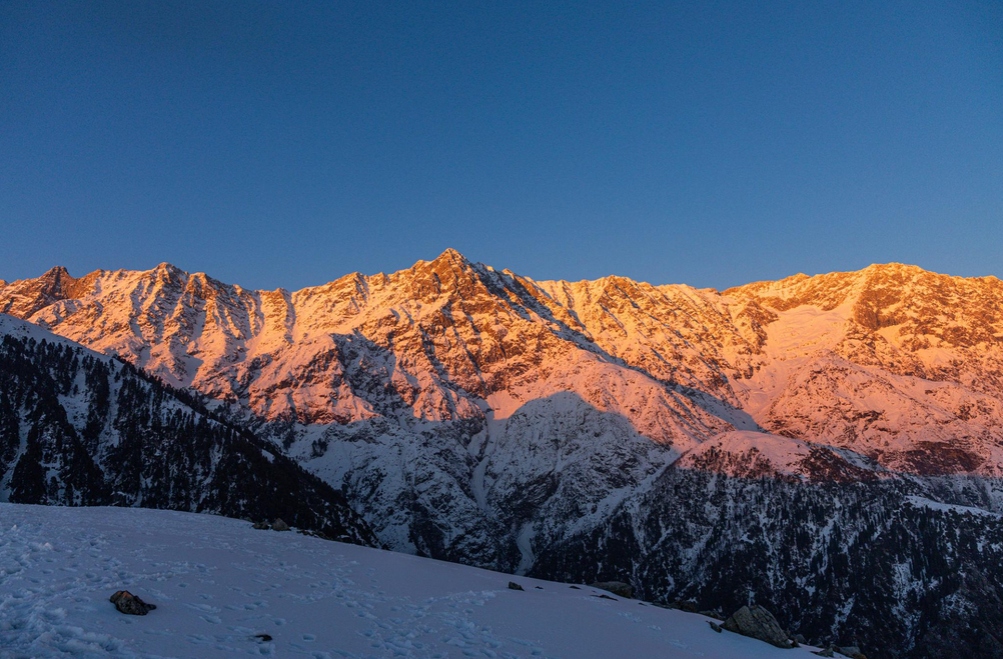
Nestled in the pristine Kangra Valley under the protective shadow of the majestic Dhauladhar mountain range, Dharamshala and Palampur stand as the twin jewels of Himachal Pradesh tourism. Whether you are a solo backpacker looking for spiritual awakening, an adrenaline junkie seeking thrilling Himalayan treks, or a family wanting a peaceful retreat amongst rolling green hills, the diverse places to visit in Dharamshala and Palampur cater to every possible wanderlust.
In this comprehensive, carefully curated guide, we will embark on a virtual journey through the Tibetan-influenced streets of McLeod Ganj, hike up to the heavenly clouds of Triund, wander through the aromatic tea estates of Palampur, and uncover ancient temples that hold the valley's deepest secrets. Save this ultimate list for your 2026 travel itinerary, as we break down every location with timings, entry fees, and insider tips to guarantee an unforgettable Himalayan adventure.
Looking to plan your activities? Don't miss our dedicated guides on Things to Do in Dharamshala and Things to Do in Palampur. If you're traveling from the capital, secure a comfortable ride with our Delhi to Himachal Taxi Service.
Why Visit Dharamshala and Palampur Together?
Located just 35 kilometers apart (a scenic one-hour drive), Dharamshala and Palampur offer contrasting yet highly complementary experiences. Dharamshala is the bustling, culturally rich capital of the exiled Tibetan government, filled with vibrant cafes, monasteries, and international tourists. In stark contrast, Palampur, famously known as the Tea Capital of Northwest India, offers serene, uncrowded landscapes, pine forests, and soothing water streams. Combining both destinations into a single trip ensures you get the best of spirituality, culture, adventure, and absolute relaxation without wasting days on long-distance travel.
Top Tourist Attractions in Dharamshala: The Little Lhasa
Divided into the lower town (commercial hub) and upper town (McLeod Ganj), Dharamshala is a globally recognized destination. Let’s dive into the absolute best spots you cannot afford to miss.
1. McLeod Ganj & The Dalai Lama Temple Complex (Tsuglagkhang)
Known worldwide as "Little Lhasa," McLeod Ganj is the heart of the Tibetan community in exile and the residence of His Holiness the 14th Dalai Lama. The Tsuglagkhang Complex is the primary pilgrimage site, featuring massive gilded statues of Lord Buddha, Avalokiteshvara, and Padmasambhava. The atmosphere here is deeply meditative, with the constant low hum of monks chanting and prayer wheels spinning endlessly.
What to Expect, Timings, and How to Reach
Timings: 5:00 AM to 8:00 PM daily (open to all).
Entry Fee: Completely Free.
Pro-Tip: Check the official schedule online before your visit; if you are incredibly lucky, you might catch a public teaching session by the Dalai Lama himself. To reach here, you can take a local taxi from lower Dharamshala or use the breathtaking Dharamshala Skyway (Ropeway) which takes just 5 minutes and offers sweeping valley views.
2. Triund Trek: A Heavenly Hike Above the Clouds
If there is one adventure activity that defines a trip to Dharamshala, it is the Triund Trek. This spectacularly beautiful trail winds through dense forests of oak, deodar, and rhododendron, finally opening up to a massive green ridge that offers a dramatic, face-to-face view of the snow-draped Moon Peak (Indera Pass) and the Dhauladhar mountains on one side, and the sprawling Kangra valley on the other.
Best Time to Trek, Distance, and Difficulty Level
Trek Distance: Roughly 9 kilometers (one way) from McLeod Ganj or 7 kilometers from Dharamkot.
Difficulty Level: Easy to Moderate. Highly suitable for beginners with basic fitness.
Best Time to Visit: March to June and September to November. Avoid the heavy monsoons (July-August) due to slippery trails.
Pro-Tip: While you can complete the trek in a single day (starting early morning and returning by evening), the real magic lies in camping overnight at the top. Watching the sun set behind the Himalayas and waking up to a golden sunrise over the snow peaks is a life-altering experience.
3. Bhagsunag Waterfall and Ancient Shiva Temple
Located just 2 kilometers up from McLeod Ganj, the village of Bhagsu is famous for its ancient temple dedicated to Lord Shiva and the mystical Bhagsunag Waterfall. The temple features a freshwater spring that is considered highly sacred, and taking a dip in its freezing, crystal-clear waters is believed to have healing properties. A short 20-minute hike from the temple takes you to the waterfall, a spectacular sight especially during the post-monsoon months.
Timing, Entry Fee, and Hidden Cafes
Timings: 5:00 AM to 8:00 PM.
Entry Fee: Free.
Hidden Secret: Once you reach the waterfall, don't stop there. Hike up a slightly steep, narrow path next to the falls for another 10 minutes to reach the legendary Shiva Cafe. It’s one of the most aesthetic, chilled-out cafes in the region, perfect for enjoying a hot plate of Maggi, ginger tea, and trance music right beside a flowing stream.
4. HPCA Stadium: The Most Beautiful Cricket Ground in the World
You do not have to be a cricket fan to appreciate the Himachal Pradesh Cricket Association (HPCA) Stadium. Situated at an altitude of 1,457 meters with the snow-capped Dhauladhars serving as a dramatic, cinematic backdrop, it is widely considered one of the most picturesque sports stadiums globally. The Tibetan-style architecture of the main pavilion adds a unique local touch.
Visitor Information, Tickets, and Tour Details
Timings: 9:00 AM to 6:00 PM (on non-match days).
Entry Fee: Nominal fee of ₹20 to ₹50 for a stadium tour.
Best Time for Photography: Late afternoon, just before sunset, when the mountains behind the stadium turn a brilliant shade of gold and pink.
5. Kangra Art Museum & Norbulingka Institute
For those deeply interested in history and local art, these two locations are mandatory. The Kangra Art Museum in Kotwali Bazaar houses a magnificent collection of rare 5th-century artifacts, royal costumes, ancient weaponry, and the world-famous Kangra miniature paintings.
A short drive away lies the Norbulingka Institute, a stunning, tranquil sanctuary dedicated to preserving traditional Tibetan art forms. Walking through its lush, Japanese-style gardens and watching artisans hand-paint intricate Thangkas (Tibetan scroll paintings), carve wood, and craft metal statues is a deeply immersive cultural experience.
Best Places to Visit in Palampur: The Tea Capital of North India
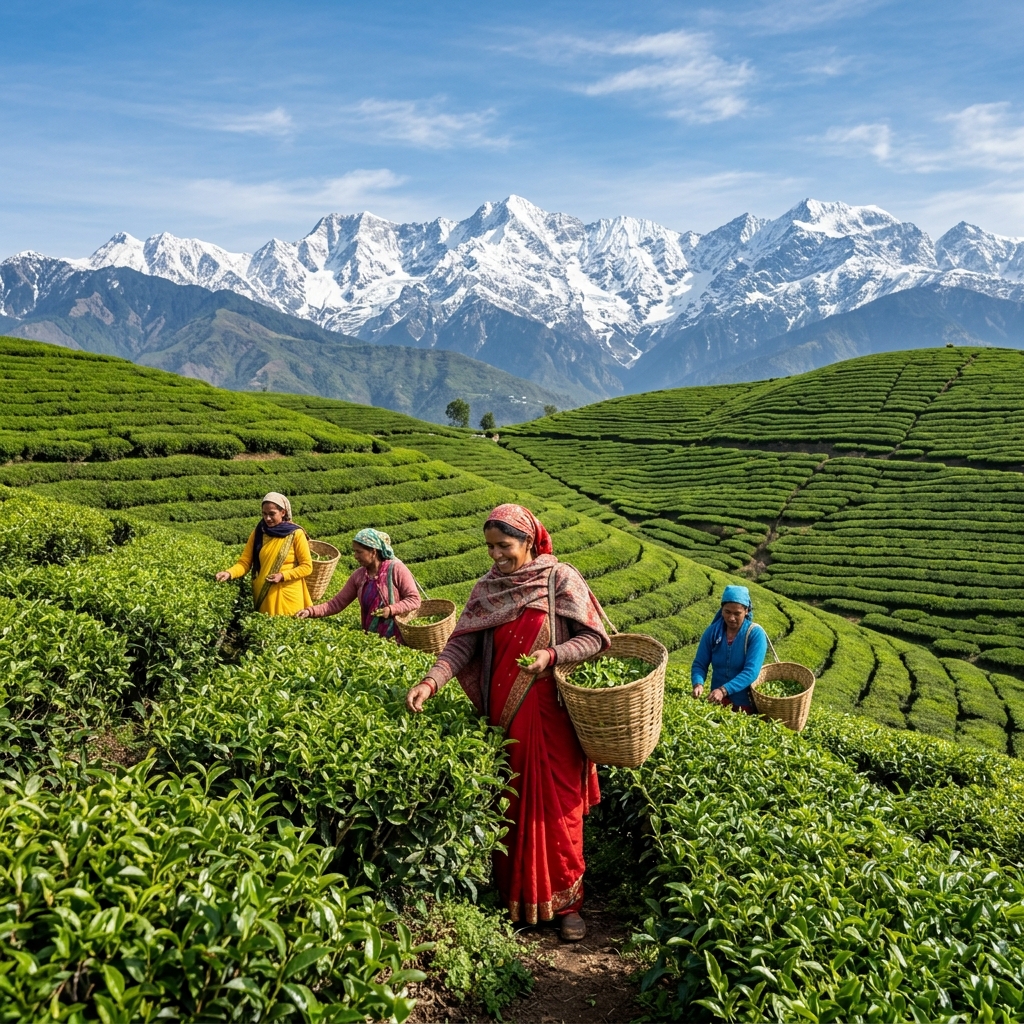
Leaving the bustling streets of Dharamshala behind, a scenic 35 km drive brings you to Palampur. Here, the air smells sweeter, the pine trees grow taller, and the landscape transforms into endless rolling waves of green tea bushes.
6. Palampur Tea Gardens: Emerald Green Landscapes
Introduced by Dr. Jameson in the 19th century, the Kangra Tea grown in Palampur is world-renowned for its distinct flavor and aroma. The tea estates stretch out like an endless emerald carpet against the contrasting white of the Dhauladhar peaks. Walking through these meticulously maintained gardens on a misty morning is nothing short of therapeutic.
Tea Tasting, Factory Tours, and Photography Spots
Activities: Visit the Palampur Cooperative Tea Factory to see exactly how tea is plucked, dried, processed, and packed. You can also participate in tea-tasting sessions where you can sample pure black, green, and oolong Kangra tea.
Photography: The best spots for Instagram-worthy pictures are along the Bundla Tea Estate path. Wear bright colors (reds and yellows) to stand out gorgeously against the lush green background!
7. Tashi Jong Monastery: A Peaceful Buddhist Retreat
Located slightly outside the main town of Palampur, the Tashi Jong Monastery is not just a religious center but a complete Tibetan settlement. It is far less crowded than McLeod Ganj, offering a much more intimate and peaceful experience. The main shrine is brilliantly decorated with detailed wood carvings, frescoes, and a massive golden statue of Buddha.
Tibetan Crafts, Souvenirs, and Serene Views
The complex also houses a renowned craft emporium. If you are looking for authentic, hand-woven Tibetan carpets, traditional clothing, and deeply symbolic Buddhist artifacts at reasonable prices, this is the place to buy them. The surrounding gardens offer quiet corners perfect for reading or meditation.
8. Neugal Khad & Saurabh Van Vihar
For families and nature lovers, Neugal Khad is a wide, rocky riverbed where a crystal-clear mountain stream flows furiously during the monsoons and gently during the summer. Right next to it is Saurabh Van Vihar, a massive, lush green nature park spread across 35 acres, built in memory of Kargil War hero Captain Saurabh Kalia.
Picnics, Riverside Walks, Boating, and Family Fun
Activities: The park features small artificial lakes for boating, children's play areas, and beautifully laid out walking trails surrounded by pine trees and exotic flora. Pack a lunch, sit on the massive boulders near Neugal Khad, dip your feet in the icy water, and enjoy a perfect family picnic under the sun.
9. Baijnath Temple: Ancient Shiva Shrine of Immense Power
Located 16 km from Palampur on the way to Bir Billing, the Baijnath Temple is one of the most prominent architectural and spiritual wonders of Himachal Pradesh. Built in 1204 AD by two local merchants, Ahuka and Manyuka, the temple is dedicated to Lord Shiva as Vaidyanath (the Lord of Physicians).
History, Mythology, and Architectural Brilliance
Mythology: According to local legend, this is the exact spot where the demon king Ravana worshiped Lord Shiva to attain invincibility. Interestingly, due to a curse related to Ravana, the town of Baijnath does not celebrate the festival of Dussehra (where Ravana effigies are normally burnt) to this day.
Architecture: The temple is a stunning example of the early medieval North Indian Nagara style of architecture, featuring incredibly intricate stone carvings, floral motifs, and ancient inscriptions that have survived centuries of earthquakes.
10. Andretta Pottery Village: An Artist's Paradise
A short detour from Palampur takes you to Andretta, a quaint, peaceful village that has served as a haven for artists, theater practitioners, and potters since the 1920s, when it was founded by Irish theater artist Norah Richards. Today, it is famous nationwide for the Andretta Pottery and Craft Society.
Workshops, Terracotta Art, and Art Galleries
What to do: Take a 20-minute guided tour of the pottery studio where local artisans create the famous Kangra blue pottery. For a small fee, you can sit at the potter's wheel and get a hands-on lesson to create your own terracotta masterpiece. Do not forget to visit the Sobha Singh Art Gallery located nearby, which houses original paintings by the legendary artist, including his iconic portrait of Guru Nanak and the tragic lovers Sohni-Mahiwal.
Hidden Gems Between Dharamshala and Palampur
While the main attractions are fantastic, the route connecting Dharamshala and Palampur is peppered with extraordinary hidden gems that most standard tourist itineraries completely miss.
11. Chamunda Devi Temple and Kangra Valley Views
Situated perfectly midway between Dharamshala and Palampur on the banks of the Baner River, the Chamunda Devi Temple is one of the most powerful Shakti Peethas in the region. The temple complex is massive, featuring ancient idols, a cave-like shrine holding a sacred Shivalinga, and a beautiful bridge crossing the roaring river. The spiritual energy here is incredibly intense.
12. Gyuto Tantric Monastery
Located in Sidhbari, this grand monastery stands out with its striking yellow architecture against the green hills. It is the temporary residence of the 17th Karmapa. Unlike other monasteries, the Gyuto order focuses heavily on esoteric tantric teachings, deep meditation, and overtone chanting (a unique vocal style where monks sing multiple notes simultaneously). It is an awe-inspiring, visually magnificent place that feels entirely detached from the modern world.
The Perfect 3-Day Itinerary for Dharamshala and Palampur
To make the most of your trip without feeling rushed, follow this highly optimized 3-day travel plan:
Day 1: Exploring McLeod Ganj & Dharamshala City
- Morning: Arrive in Dharamshala, take the Skyway to McLeod Ganj. Visit the Dalai Lama Temple and spin the prayer wheels.
- Afternoon: Walk down to Bhagsunag Waterfall. Have lunch at Shiva Cafe.
- Evening: Visit St. John in the Wilderness Church (a neo-gothic church amidst deodar forests) and explore the local Tibetan markets for souvenirs. Dine at a rooftop cafe like Illiterati or Tibet Kitchen.
Day 2: The Mighty Triund Trek or Spiritual Journey
- For Adventure Lovers: Start the Triund trek early at 8:00 AM. Reach the top by 1:00 PM, enjoy the panoramic views, have Maggi, and return by 6:00 PM (or camp overnight).
- For a Relaxed Day: Visit the HPCA Stadium in the morning, followed by the Norbulingka Institute and Gyuto Monastery in the afternoon.
Day 3: The Tea Estates of Palampur and Bir Billing
- Morning: Drive to Palampur. Take a walk through the Palampur Tea Gardens and visit the cooperative factory.
- Afternoon: Visit the ancient Baijnath Temple and spend an hour at the Andretta Pottery Village.
- Evening: Relax at Neugal Khad before driving back, or extend your trip by heading further east to Bir Billing (the paragliding capital of India) for a sunset flight!
Travel Tips for a Hassle-Free Trip
How to Reach Dharamshala & Palampur
- By Air: The nearest airport is Gaggal Airport (Kangra), located just 15 km from Dharamshala and 35 km from Palampur. Daily flights operate from Delhi.
- By Train: The nearest broad-gauge railway station is Pathankot (85 km away). From there, you can take a bus, taxi, or the charming narrow-gauge Kangra Valley toy train that goes right up to Palampur.
- By Road: Excellent Volvo bus services operate daily from Delhi (Majnu Ka Tilla) and Chandigarh. The drive takes about 10-12 hours overnight.
Best Time to Visit Kangra District
March to June: The most popular time. The weather is cool, skies are clear, and it is the perfect escape from the blistering heat of the Indian plains.
September to November: Highly recommended. The post-monsoon period leaves the valley incredibly green, the waterfalls are full, and the air is crisp and clear for mountain viewing.
December to February: Best for snow lovers. McLeod Ganj and Triund receive heavy snowfall, turning the region into a winter wonderland. (Pack heavy woolens!)
Conclusion: Your Himalayan Adventure Awaits
Whether you are spinning prayer wheels in McLeod Ganj, sipping freshly brewed Kangra tea in Palampur, or staring in awe at the mighty Dhauladhar range from the top of Triund, the memories you make here will last a lifetime. The sheer variety of places to visit in Dharamshala and Palampur ensures that every traveler finds exactly what they are looking for—peace, adventure, spirituality, or simply a deep connection with nature. Pack your bags, book your tickets, and get ready to experience the true essence of Devbhoomi (The Land of Gods).
Frequently Asked Questions (FAQs) About Dharamshala & Palampur
1. How many days are sufficient for Dharamshala and Palampur?
A minimum of 3 to 4 days is required to explore the major attractions comfortably. Add an extra day if you plan to do the Triund overnight trek or visit Bir Billing.
2. Is there snowfall in Palampur?
Palampur town rarely receives heavy snowfall, but the surrounding Dhauladhar peaks are covered in snow during winters. Dharamshala (especially McLeod Ganj and upper reaches like Dharamkot) experiences regular snowfall between December and February.
3. Are these places safe for solo female travelers?
Yes, Himachal Pradesh, and specifically the Kangra district (Dharamshala and Palampur), is considered one of the safest tourist destinations in India for solo female travelers. The locals are exceptionally warm, helpful, and respectful.